What Is Tempered Glass? A Complete Guide to Features and Uses
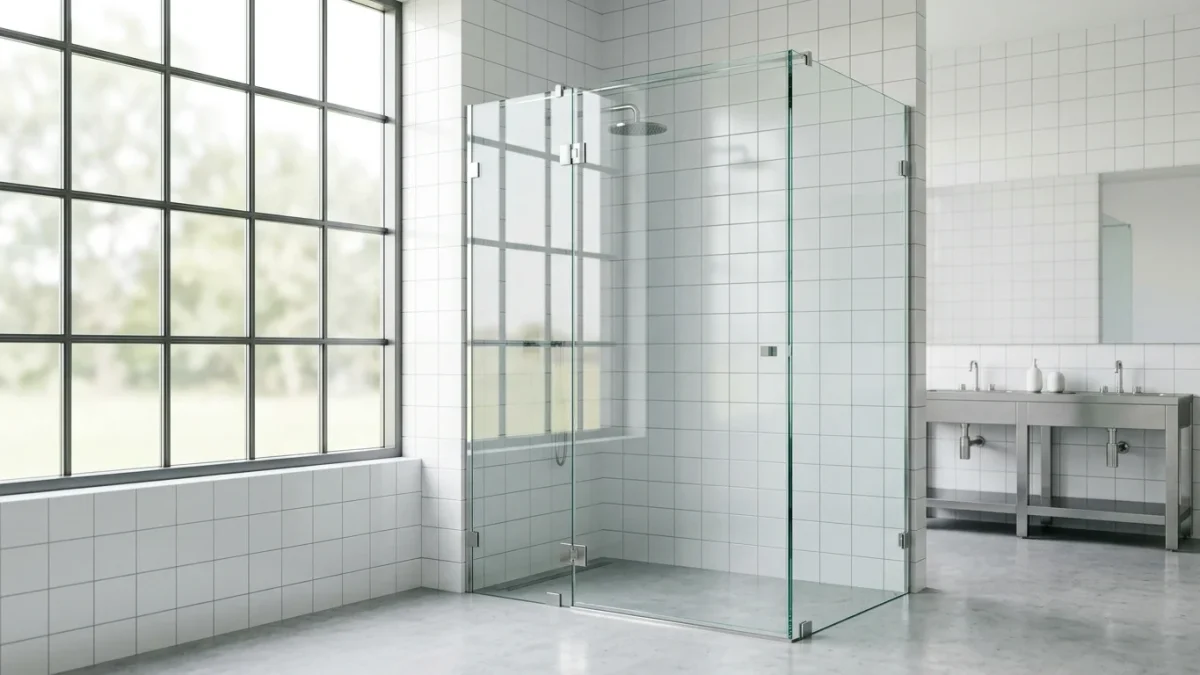
Tempered glass is a type of safety glass that becomes several times stronger than regular glass through heating and rapid cooling, and when it breaks it turns into small, low-risk granules. From shower enclosures and glass doors to facades and balcony railings, most of the glass you deal with in a building is tempered.
In this guide, from a manufacturer’s point of view, we explain what tempered glass is, how it is made, what features it has and where it should be used.
What Is Tempered Glass?
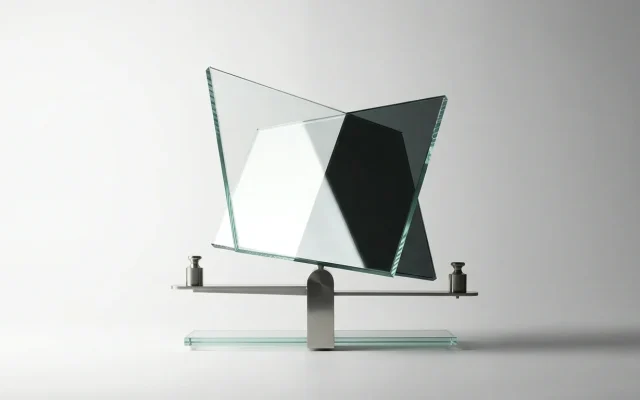
Tempered glass is glass that, after cutting, edging and machining, is heated again to about 600 to 700 °C and then cooled suddenly. This process creates “compressive stress” at the surface of the glass and “tensile stress” in its core.
The result is glass that handles impact, bending and sudden temperature changes far better than regular glass. For this reason, tempered glass is classified as safety glass in most building standards.
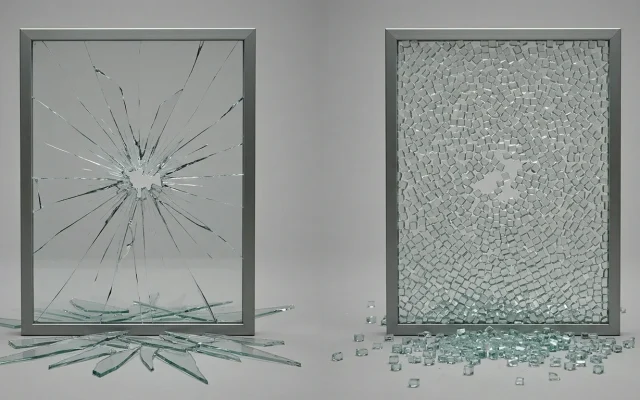
Regular glass, also called annealed glass, has very little internal stress. When it is struck, the crack spreads across the whole surface almost instantly and produces long, sharp pieces. This behavior is why its use is restricted in buildings, especially where people are close to the glass.
One important point from the start: tempering is the last stage of manufacturing. After it, the glass can no longer be cut or drilled.
The Heat Treatment Process Explained Simply
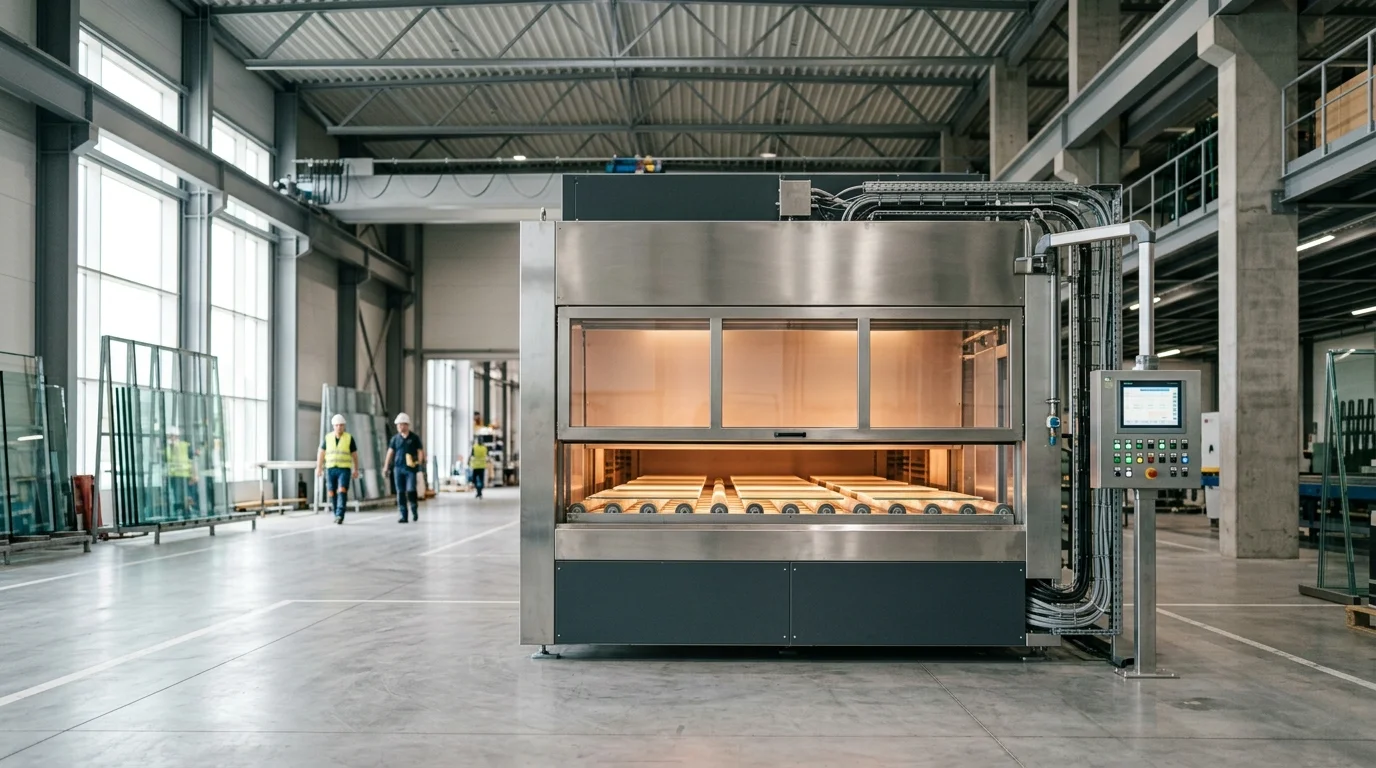
The core idea is simple: keep the surface of the glass “compressed” and its core “stretched.” The steps in the tempering furnace are as follows:
- Uniform heating: the glass is heated in the furnace to near its softening point.
- Sudden cooling: compressed air is blown onto both surfaces of the glass.
- Uneven contraction: the surface hardens first and the core later; as the core contracts, it pulls the surface inward.
- Permanent stress: the surface stays in compression and the core stays in tension.
Uniform heating and cooling are very important. If the temperature is not even across the sheet, the stresses become asymmetric and the glass may warp or become prone to breakage. This is why equipment and process control play a decisive role in final quality.
Cracks usually start from an edge or a surface flaw. The compressive stress at the surface stops the crack from advancing. But if a crack reaches the core, the stored energy is released and the entire piece breaks into small, rounded granules rather than long, sharp shards.
At Telo, the glass goes through several stages before it reaches the furnace: CNC cutting, the smart scanner table, edging with a double edger, industrial washing and, when needed, CNC machining. It is then tempered in NorthGlass furnaces under North Glass technical and quality supervision, and final quality control is carried out at the end.
Key Features
- High mechanical strength: tempered glass is typically about 4 to 5 times stronger than regular glass of the same thickness against load and impact.
- Better heat resistance: it handles sudden temperature differences, such as sunlight falling on part of the glass, more easily.
- Safe breakage: the fragments are small and rounded, so the risk of deep cuts is lower.
- Production variety: at Telo, flat tempered glass is produced in sizes up to 2500 × 5000 mm, in thicknesses from 3 to 19 mm and in a variety of colors.
- Bending capability: bent unbreakable glass is made with the same process, up to a height of 3800 mm and with a bending radius of 1100 mm and above.
Edge quality matters too. An edge that has not been finished properly can become the starting point of a crack; for this reason, precise edging before tempering is part of the product’s safety.
There are limits as well. Tempered glass cannot be cut after production, and its surface may show a very faint optical waviness. With proper planning before ordering, these points do not cause problems.
Uses
Wherever safety, strength and a transparent look are needed together, tempered glass is a common choice:
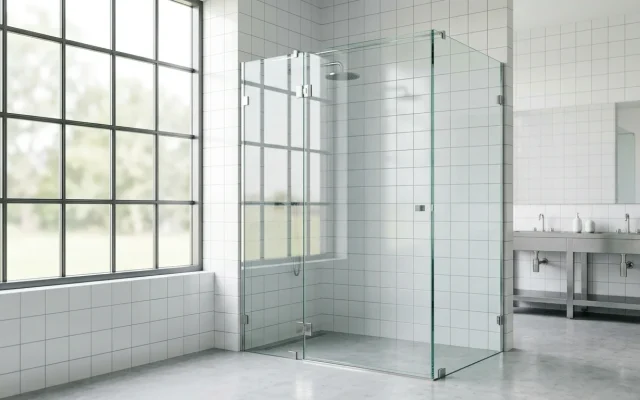
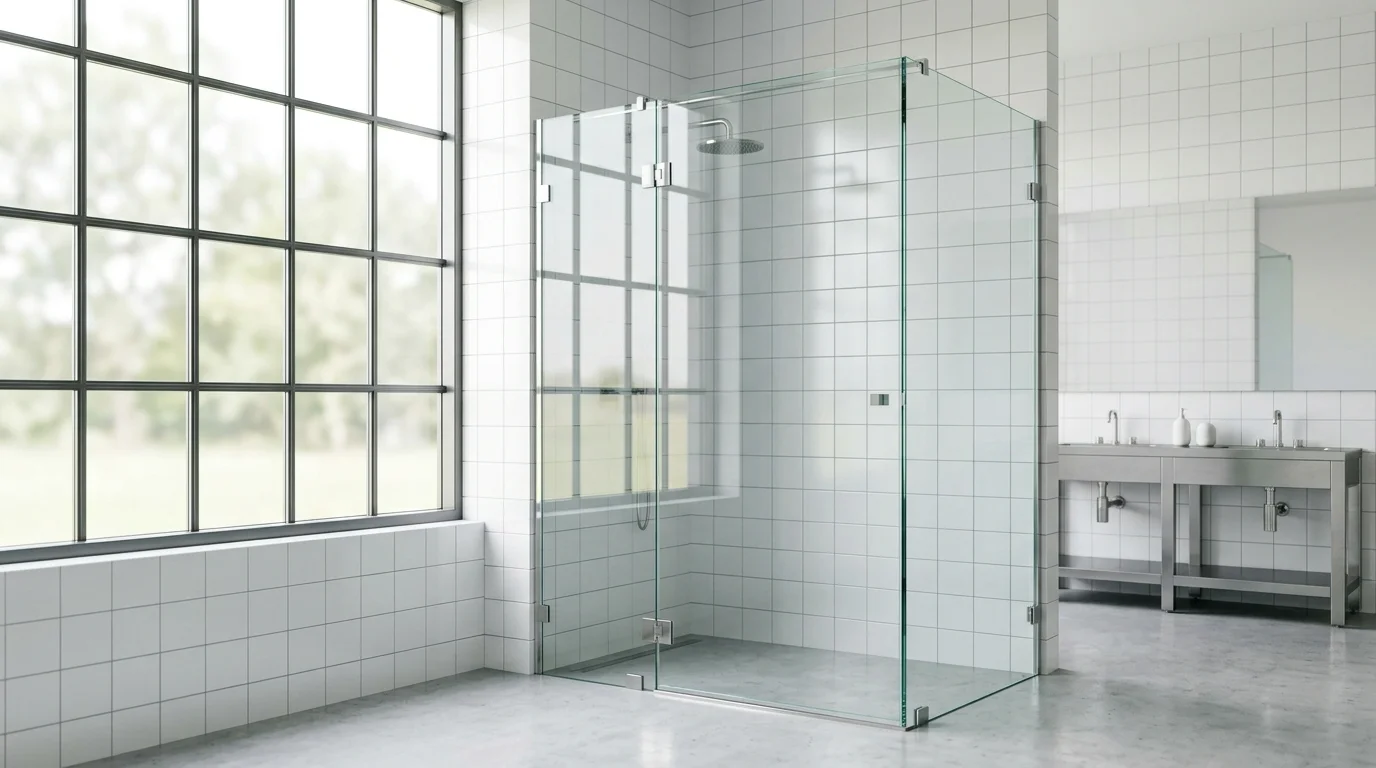
- Shower enclosures and bathrooms
- Glass doors and office partitions
- Balcony railings, stairs and pool fences
- Building facades and shop windows
- Glass tables, decor and kitchen backsplashes
- Glass elevators and commercial spaces
During installation, the edge of tempered glass should not touch metal or stone directly; use suitable pads and hardware. As a general rule, shower enclosures and tables are usually made with thinner glass, while doors, railings and facades use thicker glass, but the exact number must be set by the designer or manufacturer based on size and load.
Where falling or dropping fragments would be dangerous, such as railings at height or canopies, it is better to combine tempered glass with a laminated layer. The choice of safety glass always depends on the installation location and the level of risk.
Differences from Regular Glass
They look almost the same, but they behave very differently:
| Criterion | Regular glass | Tempered glass |
|---|---|---|
| Impact resistance | Baseline | About 4 to 5 times |
| Breakage pattern | Large, sharp pieces | Small, rounded granules |
| Heat resistance | Low | Higher |
| Can be cut after production | Yes | No |
| Safety | Lower | Classified as safety glass |
| Price | Lower | Higher, due to the heat treatment |
If your budget is limited but safety matters, compare the extra cost of tempering with the potential damage caused by regular glass; in most projects the difference is easy to justify.
For a scientific overview of the process, you can visit the Tempered glass entry on Wikipedia.
Does Tempered Mean Unbreakable? Frequently Asked Questions
Does tempered mean unbreakable?
No. Tempered means stronger and safer, not impossible to break. Tempered glass is very resistant to impact, but a hard point impact or a damaged edge can still break it. The key difference is that it shatters into small, low-risk granules. Where falling fragments would be dangerous, combining it with laminated glass is recommended.
Can tempered glass be cut or drilled?
No. Cutting, edging and drilling must be done before the heat treatment. After tempering, any attempt to cut or drill the glass will shatter the entire piece, so finalize dimensions and machining before placing your order.
How many times stronger is tempered glass than regular glass?
Tempered glass is typically about 4 to 5 times stronger than regular glass of the same thickness against load and impact. The exact figure depends on thickness, edge quality and installation conditions.
What sizes and thicknesses of tempered glass does Telo produce?
At Telo, flat tempered glass is produced in sizes up to 2500 × 5000 mm, in thicknesses from 3 to 19 mm and in a variety of colors. Bent glass can be produced up to a height of 3800 mm with a bending radius of 1100 mm and above.
Summary
Tempered glass is made through a controlled heat treatment, is far more resistant to impact and heat than regular glass, and turns into low-risk granules if it breaks. Still, it is not “absolutely unbreakable,” and its thickness, type and combination should be chosen based on where it will be installed. Ordering from a manufacturer that carries out the whole process under quality supervision is the best guarantee of your safety.