Tempered vs Regular Glass: Strength, Safety and Price
The difference between tempered and regular glass is not only price; the two differ completely in internal structure, strength, breakage pattern and safety. Glass that looks identical can become several times stronger through a heat treatment.
In this article we compare the two types from several angles and finish with a summary table and a selection guide, so you know which glass is right for each location.
Structure and Production
Regular glass, also called annealed glass, is made from float glass that is cooled slowly after forming so that its internal stress stays very low. For an introduction to this process, you can visit the Annealing (glass) entry on Wikipedia. This glass can easily be cut, drilled and edged.
Tempered glass is made from the same glass, but after cutting, edging and machining it is heated again to about 600 to 700 °C and suddenly cooled with air. This leaves the surface compressed and the core stretched. We explain the details of this process in our article What Is Tempered Glass?
The most important structural difference is that tempering is the last manufacturing stage, and after it the glass can no longer be cut. At Telo, the glass goes through CNC cutting, the smart scanner, edging, washing and machining before it enters the furnace. If you want to see these stages, browse the Telo videos and the About Us page.
Mechanical and Thermal Strength
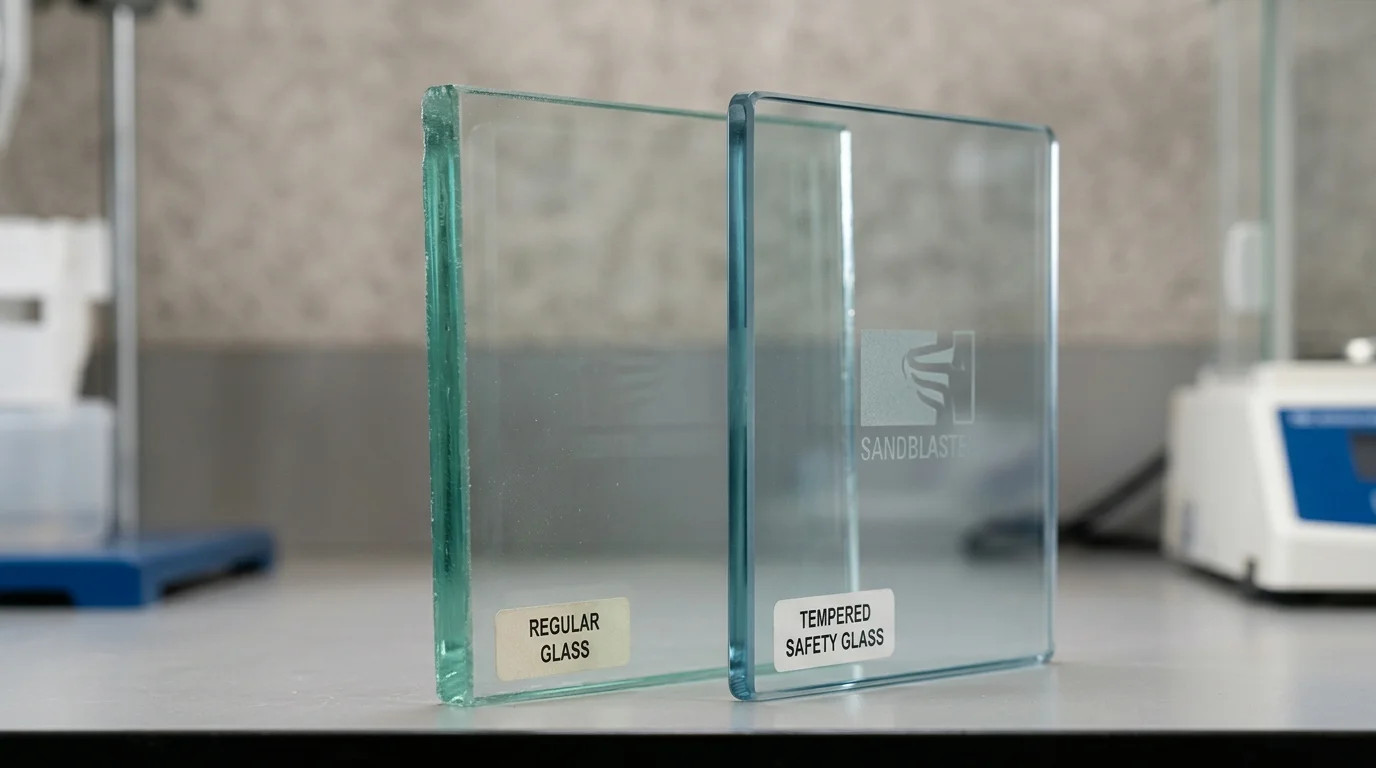
In mechanical strength, the tempered type is typically about 4 to 5 times stronger than regular glass of the same thickness against load and impact. This means an impact that breaks regular glass may pass through tempered glass of the same thickness without damage. The exact figure depends on thickness, edge quality and installation conditions.
Thermal strength differs greatly too. Regular glass is sensitive to sudden temperature differences; direct sunlight on part of the glass or hot water poured on cold glass can cause cracks. The tempered type tolerates a much larger temperature difference, up to about 200 degrees or more depending on thickness and edge.
Thickness plays a role in both types, but it does not replace choosing the right type of glass: making regular glass thicker does not make it safe, because it still breaks into sharp pieces. Tempered glass changes the breakage behavior as well as adding strength.
In both types the edge is the weakest part. In the tempered type too, a damaged edge can become the starting point of breakage, so precise edging and correct installation are part of the real strength of the product.
How They Break
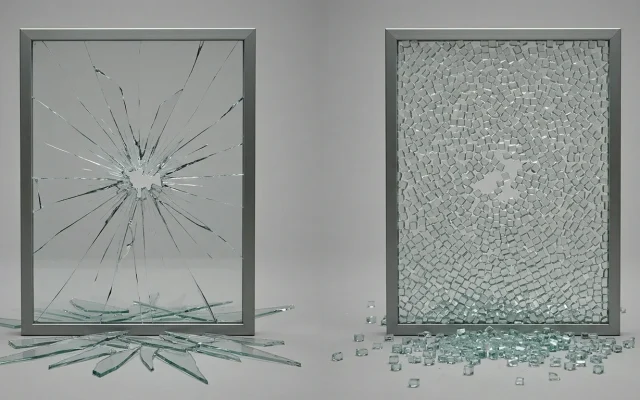
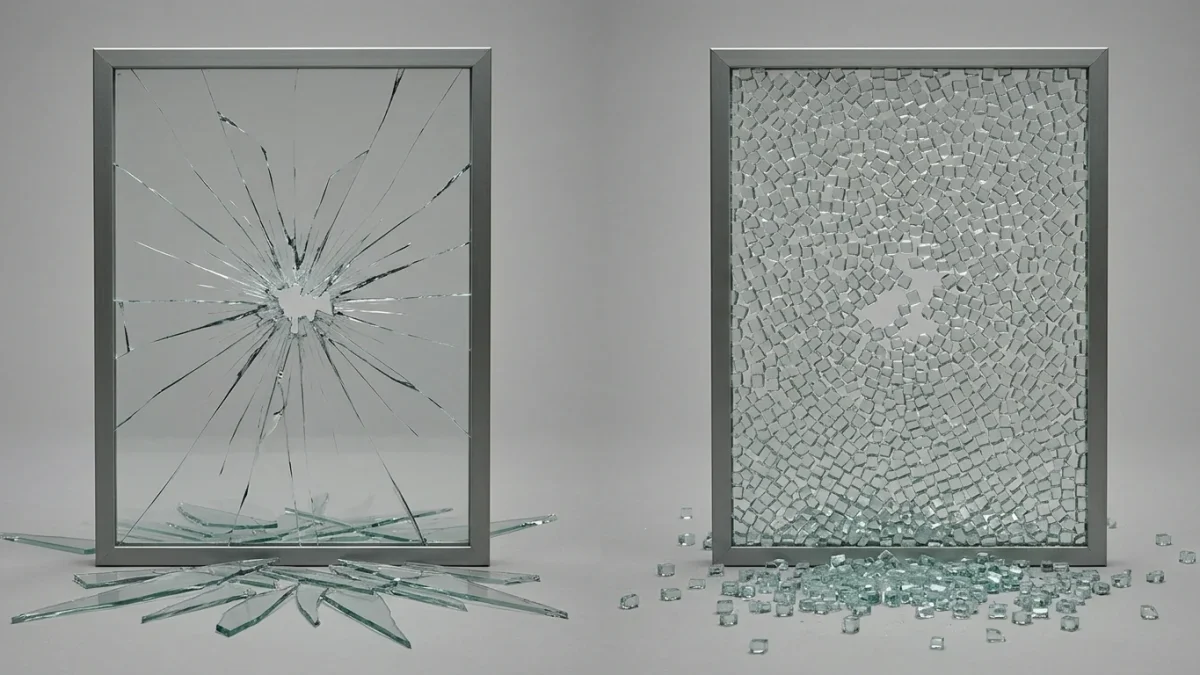
Regular glass breaks into large, long, sharp pieces that can cause deep cuts. The tempered type shatters into small, rounded granules, and the risk of serious injury is much lower.
One point that is mentioned less often: tempered glass breaks suddenly and completely; the whole piece shatters, not just one local crack. That is why, where falling fragments are dangerous, combining it with laminated glass is recommended. We explain the difference between “unbreakable” and “low-risk” further in What Is Unbreakable Glass?
Safety
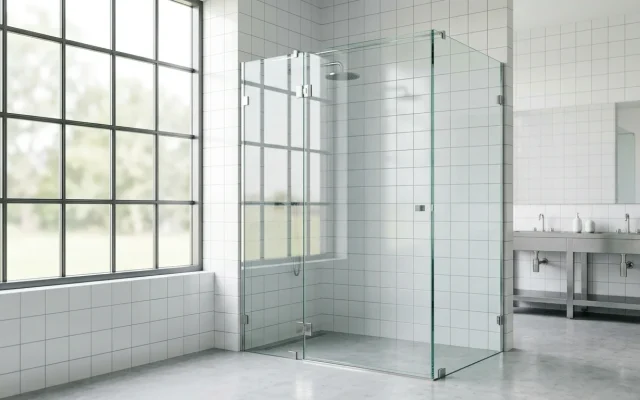
In many building standards, safety glass is required or strongly recommended in places such as shower enclosures, glass doors, railings, stairs and glass close to the floor. Regular glass in these places carries a serious risk of cuts.
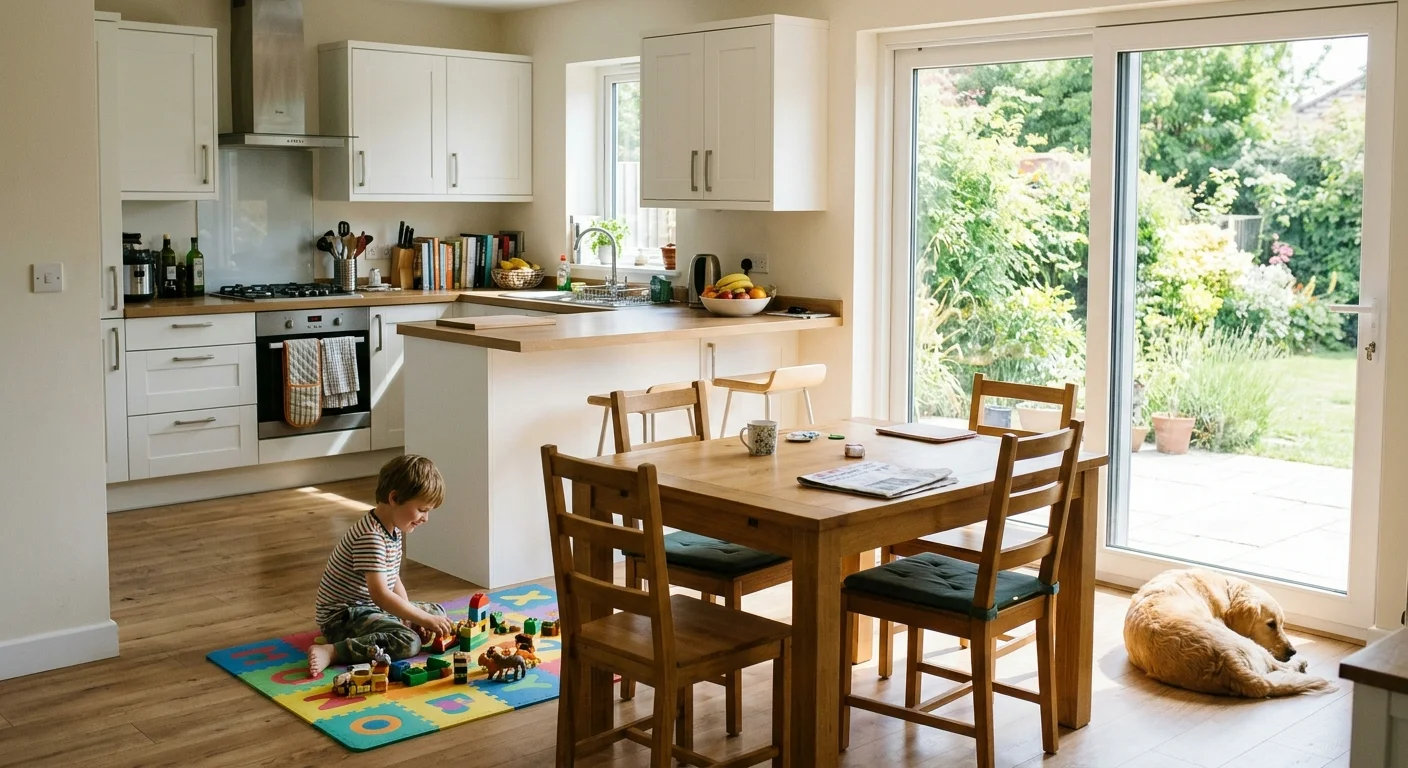
In homes with children, and in public spaces and busy entrances, this matters even more. The extra cost of tempering is very small compared with the consequences of a dangerous breakage.
If you are worried about falling fragments, laminated glass or a laminated and tempered combination is the next option; tempered glass on its own can still shatter completely under a severe point impact.
It is important to make sure the glass you receive is truly tempered. The manufacturer’s stamp in the corner of the glass is one sign, but the most reliable way is to buy from a reputable manufacturer that provides technical specifications and a warranty.
Price and Usage
The tempered type costs more than regular glass because the heat process, energy use and quality control add to the cost. The difference depends on thickness, size, color and machining, and should be quoted for each project.
But price should be seen next to risk. If the glass is installed where breakage would cause serious harm, saving on the glass is rarely worthwhile. In low-risk places away from traffic, such as frames or areas with no foot traffic, regular glass can be enough, but always base the decision on the local standard and the designer’s opinion.
The cost of tempered glass is not only the price of the sheet; edging, drilling, color and packaging also affect the price. Specify all of them when requesting a quote so the offers can be compared.
One more important point about usage and waste: because tempered glass cannot be cut after production, precise measuring before ordering is vital. An order with wrong dimensions means discarding glass and paying again.
For a quick choice, this guide helps:
- Shower enclosures and glass doors: tempered.
- Railings, stairs and facades: tempered, and at greater heights combined with laminated.
- Frames and low-risk places away from traffic: regular glass, with the designer’s approval.
- Places where falling fragments are dangerous: laminated.
Comparison Table: The Difference Between Tempered and Regular Glass
| Criterion | Regular glass | Tempered glass |
|---|---|---|
| Structure | Slow cooling, low internal stress | Sudden heating and cooling, compressed surface |
| Impact resistance | Baseline | About 4 to 5 times |
| Heat resistance | Low | Higher |
| Breakage pattern | Large, sharp pieces | Small, rounded granules |
| Can be cut after production | Yes | No |
| Safety | Lower | Classified as safety glass |
| Price | Lower | Higher |
| Common use | Low-risk places | Showers, doors, railings, facades, tables |
If you want to know which thickness and type suit your project, consult the technical team before ordering. You can reach out through the Contact Us page.
Can Tempered Glass Be Cut? Frequently Asked Questions
Can tempered glass be cut?
No. Cutting, edging and drilling must be done before the heat treatment. If you cut or drill glass that has already been tempered, the whole piece shatters. Regular glass, however, can be cut before installation and even on site.
Can installed regular glass be tempered?
No. Tempering is only possible in the factory, for glass that has already been cut to its final size and machined. Installed glass would have to be removed and sent to the factory, or new glass ordered.
How can I tell tempered glass from regular glass by sight?
You usually cannot tell by eye. Common signs are the manufacturer’s stamp in the corner of the glass and a striped pattern when viewed through a polarized filter. The most reliable approach is to buy from a reputable manufacturer and ask for technical specifications.
Which is better for shower enclosures and glass doors?
Tempered glass. In these places the chance of impact and breakage is higher, and regular glass breaking causes serious cuts. Decide the suitable thickness with the designer or manufacturer based on size and installation type.
Summary
The main difference between tempered and regular glass is the heat treatment, which multiplies strength and makes breakage low-risk. Regular glass is cheaper and can be cut, but it is not suitable for high-risk places. For shower enclosures, doors, railings and facades, tempered glass is the better choice, and dimensions and machining must be finalized before ordering.