What Is Safety Glass? Types, Benefits and Essential Uses
Safety glass is glass made to reduce the risk of injury when it breaks: it either shatters into small, low-risk granules or stays in one piece after cracking. If glass is installed within reach of people, choosing it correctly is directly a matter of safety.
In this guide we explain what safety glass is, what types exist, what benefits it has, where it is essential and how to choose the right type.
What Is Safety Glass?
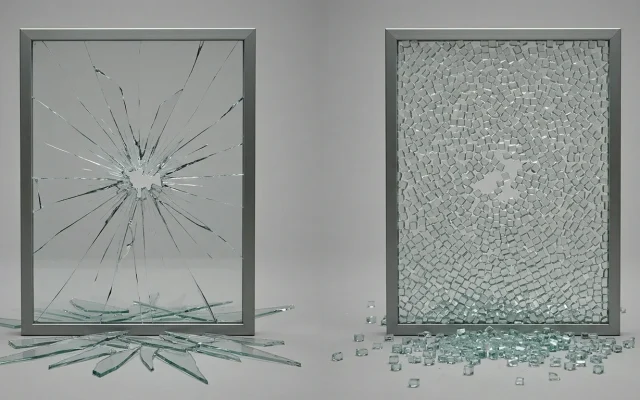
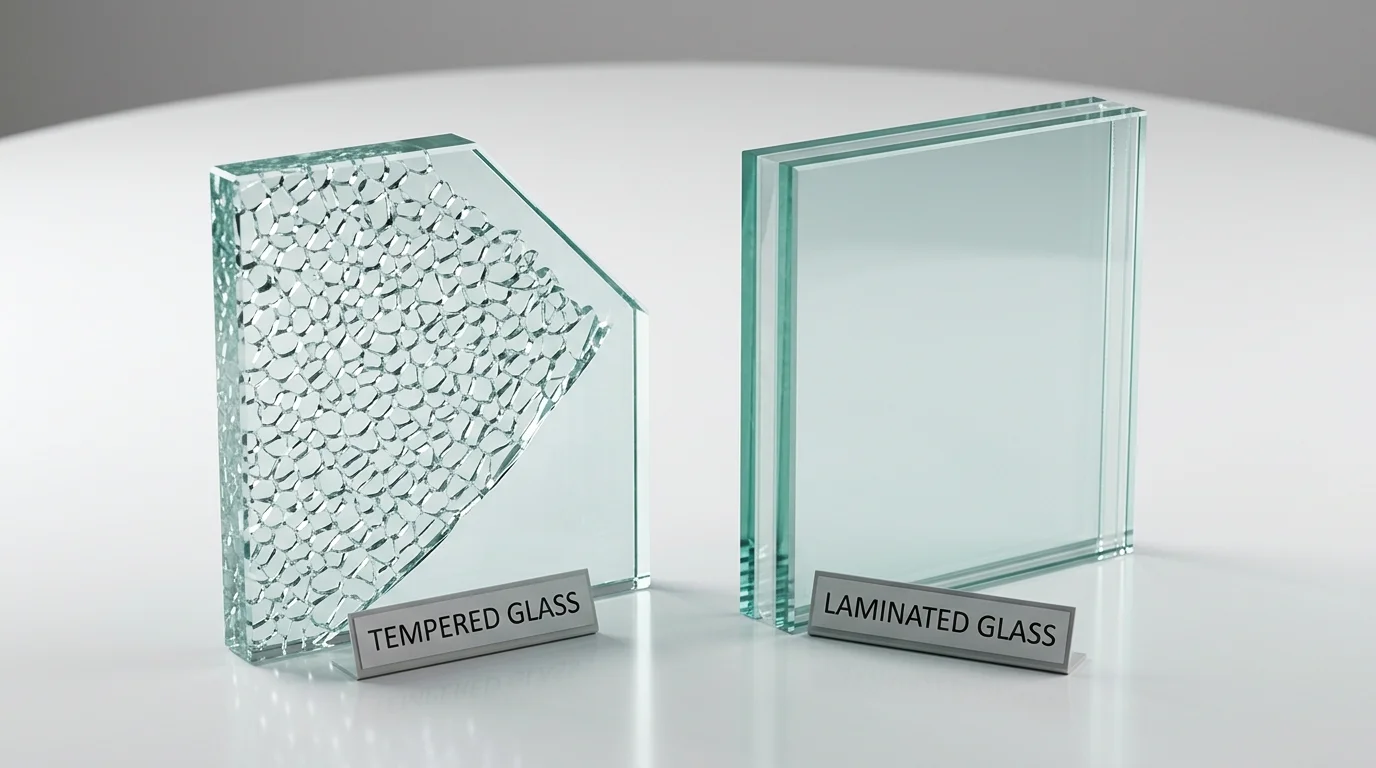
Safety glass is best defined in comparison with regular glass. Regular glass breaks on impact into large, long, sharp pieces that can cause deep cuts. It prevents this danger in one of two ways: by changing how it breaks, as tempered glass does, or by holding the pieces together, as laminated glass does.
It is important not to confuse “safety” with “unbreakable.” No glass is completely unbreakable; the difference lies in the consequences of breakage. We explain this further in What Is Unbreakable Glass?
The need to reduce accidents caused by the breakage of regular glass, in homes and public buildings, led to the development of this category of products. Today two main technologies, tempered and laminated glass, are the basis of almost all safety products in buildings.
In many building regulations, it is required or strongly recommended wherever people may come into contact with the glass. Exact details differ by country and building type. For a general overview, you can visit the Safety glass entry on Wikipedia.
Types
- Tempered glass: through a heat process it becomes about 4 to 5 times stronger than regular glass and shatters into small, rounded granules. Read the details in What Is Tempered Glass?
- Laminated glass: made of two or more layers of glass and an interlayer, usually PVB. It cracks on impact, but the pieces stay stuck to the interlayer and the glass does not fall.
- Laminated and tempered combination: for railings at height and places that need both high strength and no falling fragments.
- Bent safety glass: the same tempered or laminated glass made in a curved shape. At Telo, bent unbreakable glass can be produced up to a height of 3800 mm with a radius of 1100 mm and above.
When choosing between the two, the simple rule is this: if the main concern is contact and cuts, tempered glass is usually enough; if the main concern is falling or dropping fragments, laminated glass or its combination with tempered glass is the better option.
HS glass is not considered safety glass on its own, because it breaks into larger pieces and is usually used for large facades together with laminated or double-glazed units. You can also see the difference between tempered and regular glass in Tempered vs Regular Glass.
Benefits
- Reduced injury: small rounded fragments, or glass that stays in one piece, lower the risk of serious cuts.
- Higher strength: tempered glass is far more resistant to impact, wind pressure and load than regular glass.
- Heat resistance: tempered glass tolerates larger temperature differences and resists cracking from sunlight.
- Staying in the frame: laminated glass stays in place even after cracking and prevents fragments from falling.
- Security and comfort: laminated glass resists intrusion better and helps reduce noise and ultraviolet transmission.
Note that safety comes from the way the glass breaks and does not replace maintenance. Periodic inspection of edges and hardware and quick replacement of a cracked pane are still necessary.
The extra cost of this glass is very small compared with the consequences of a dangerous breakage, such as harm to a child or a guest. For this reason, saving on the glass type in high-risk places is rarely justified.
Where It Is Essential
In these places, it is essential or strongly recommended:
- Shower enclosures and bathrooms
- Glass doors and office and commercial partitions
- Balcony railings, stairs and pool fences
- Full-height glass and glass close to the floor
- Shop windows and busy entrances
- Canopies and skylights (usually laminated)
- Schools, hospitals, hotels and shopping centers
- Building facades
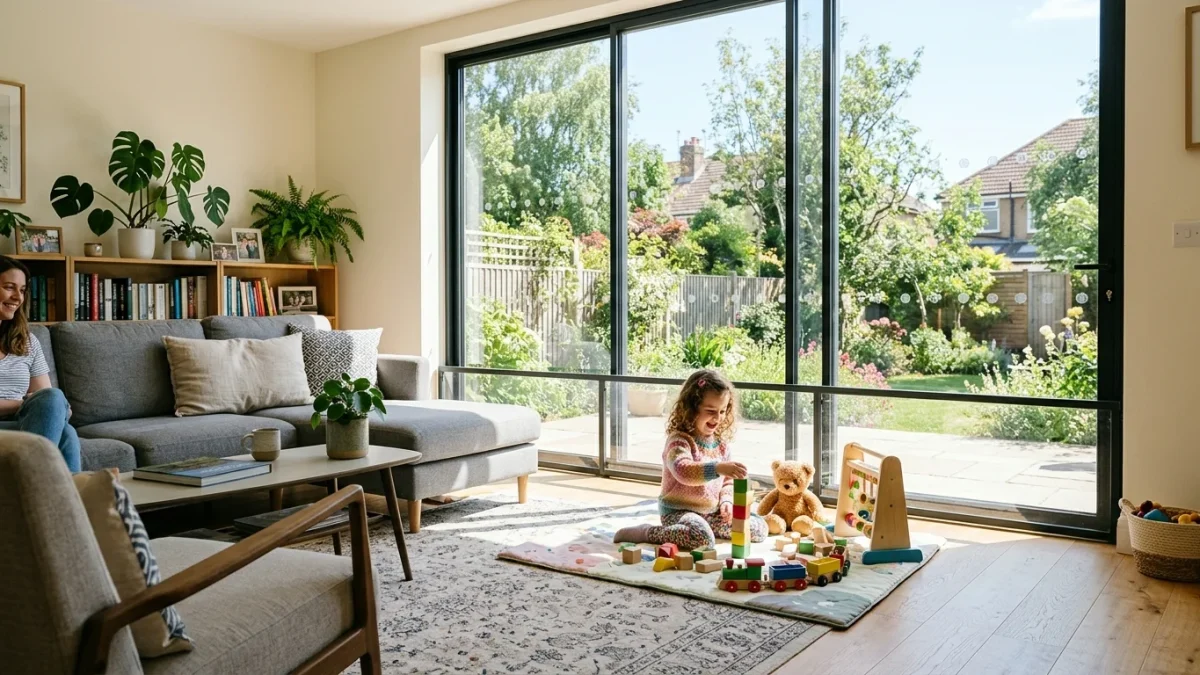
In homes with children, full-height glass, shower enclosures and glass doors are the first priorities. In public spaces there are more people and the consequences of an accident are heavier, so a more cautious choice is needed.
In schools and hospitals, easy cleaning and an open view matter as well as safety. In hotels and shopping centers, appearance and safety must be delivered together, which is possible with the right choice of type and thickness.

How to Choose
- Level of risk and height: the more dangerous a fall or falling fragments would be, the more you should move toward laminated glass or a laminated and tempered combination.
- Who uses the space: children, elderly people or large crowds raise the level of caution.
- Thickness and size: the designer or manufacturer should set thickness based on size, installation type and load, not by guesswork.
- Edges and hardware: a damaged edge or unsuitable hardware can remove the safety.
- Manufacturer and specifications: buy from a reputable manufacturer and ask for technical specifications and a warranty. Telo provides a lifetime warranty on the technical specifications of its glass.
- Budget versus risk: always weigh the price against the consequences of breakage.
One practical tip: before buying, ask the seller three things: the exact type of glass (tempered, laminated or a combination), the thickness of each layer, and the technical specifications and warranty. Clear answers to these three questions are a sign of a reputable manufacturer.
Do not forget two common mistakes: choosing only by price, and assuming that any thicker glass is automatically safer. Thickness without a change of glass type does not change how the glass breaks.
Before ordering, also finalize dimensions and machining, because tempered glass cannot be cut or drilled after production.
If you want to see the production process and quality control, browse the Telo videos and the About Us page. To decide the right type and thickness for your project, you can consult the technical team through the Contact Us page.
Which Type Is the Safest? Frequently Asked Questions
Which type of safety glass is the safest?
It depends on where it is installed. For shower enclosures and doors, tempered glass is usually enough. Where falling fragments would be dangerous, such as railings at height, canopies and skylights, laminated glass or a laminated and tempered combination is safer.
Is safety glass the same as unbreakable glass?
Not exactly. “Unbreakable” is a marketing term, and no glass survives every impact. Safety glass means glass that creates less danger when it breaks, either by shattering into small granules or by staying in one piece.
Is bent safety glass produced too?
Yes. Bent safety glass is made by tempering or by combining with laminated glass. At Telo, bent glass can be produced up to a height of 3800 mm with a bending radius of 1100 mm and above.
How can I tell that the glass I bought is safety glass?
You usually cannot tell by eye. The manufacturer’s stamp in the corner of the glass is one sign, but the most reliable way is to buy from a reputable manufacturer and ask for technical specifications and a warranty.
Summary
Safety glass means glass that carries less danger when it breaks, whether tempered glass that shatters into small granules or laminated glass that stays in one piece. Using it is essential in shower enclosures, doors, railings, stairs, busy entrances and public spaces. Choose the type and thickness based on the installation location, height and users, and ask a reputable manufacturer for technical specifications.